What does land look like after forestry mulching?
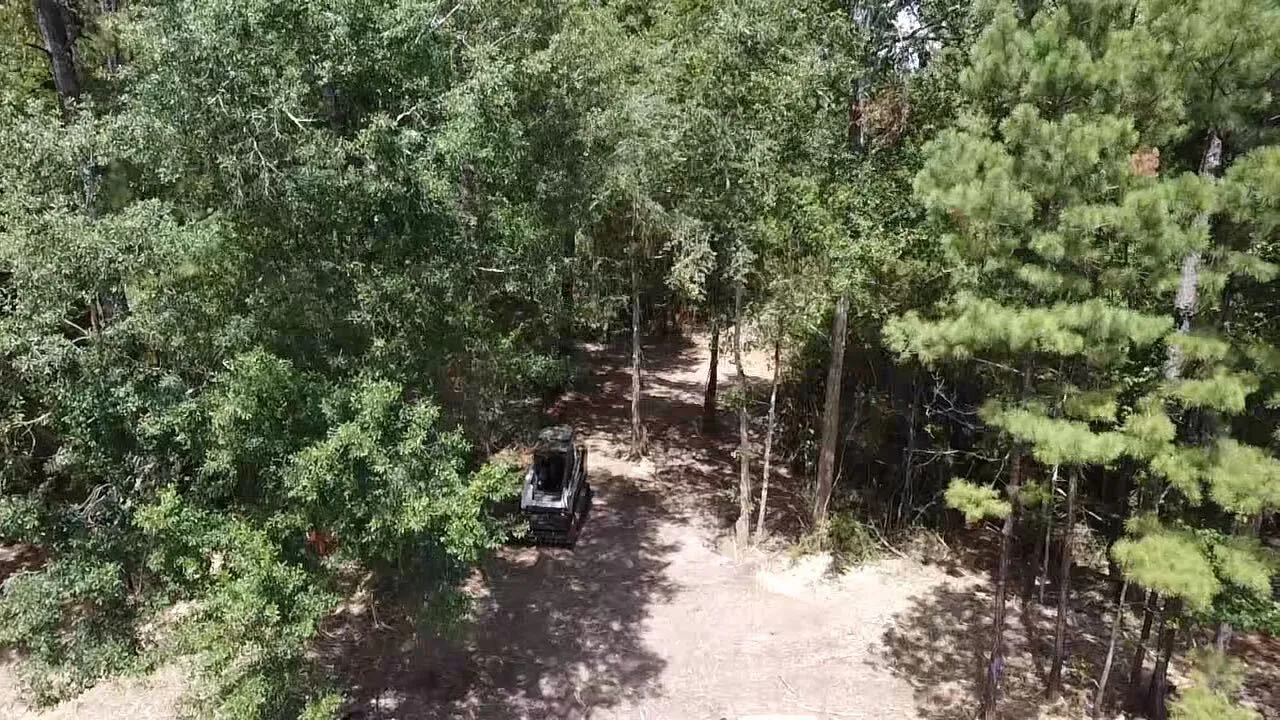
Mulched land looks like open woods with a clean floor. The brush and small trees are gone, ground into a layer of chips a few inches thick that covers the soil, and any trees you chose to keep are still standing. There are no piles, no ruts full of debris, and no bare dirt waiting to wash.
That first look is only day one, though. The ground keeps changing for a year or more after the machine leaves. Here is what to expect from forestry mulching jobs we run around Buna and the rest of Southeast Texas, from the day the work wraps to a few years out.
What does the ground look like right after mulching?
Walk a property the afternoon the machine finishes and you’ll see the whole shape of your land again. The understory that walled everything off is gone. In its place is a blanket of fresh chips, light colored and loose, lying right where the growth used to stand. The layer runs a few inches deep in most spots and thicker where heavy brush went down.
Stumps are ground flush with the surface, so nothing catches a mower blade or an ankle, but the root systems below them are still in the dirt. That is the defining trade of mulching: everything above the ground gets processed, everything below it stays.
What you will not see matters just as much. No burn piles. No windrows of pushed-over trees drying out along the fence. No trucks hauling debris down your road. The material that was standing in the morning is ground cover by the evening, which is why a mulching job ends the day the cutting ends.
Here is the kind of ground most of these jobs start from:
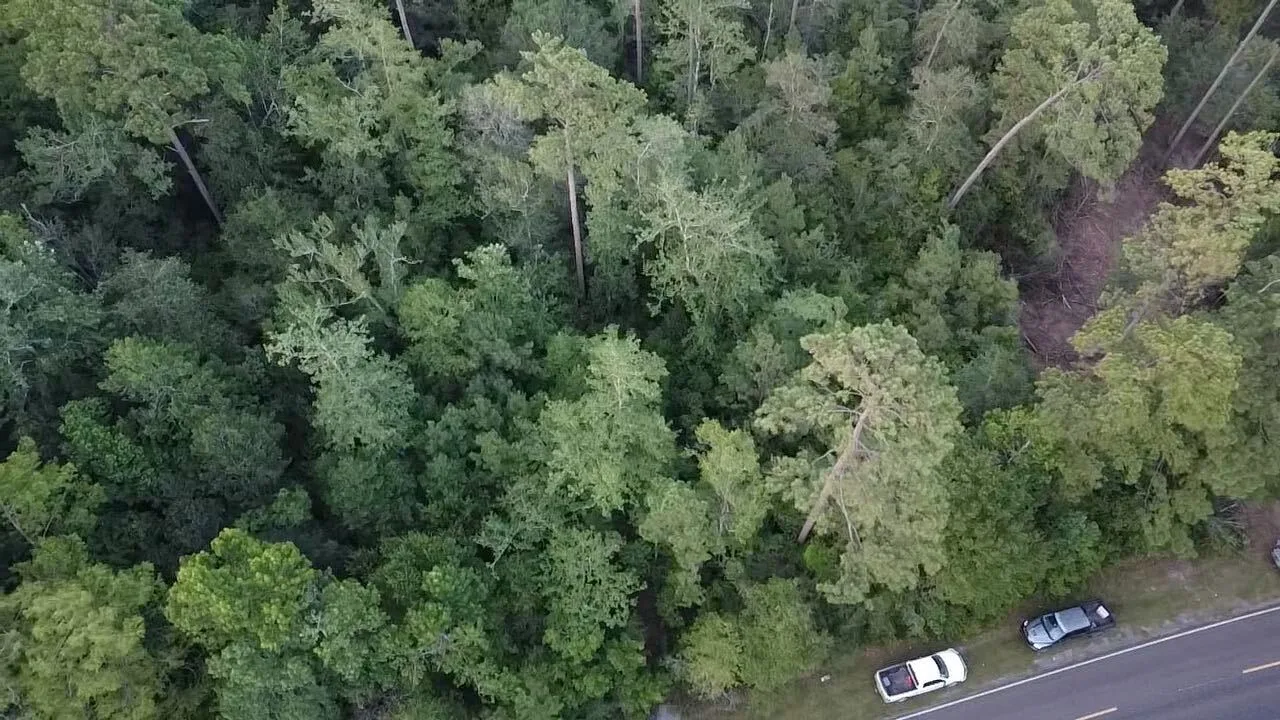
Growth that thick usually hides the property’s actual character. The after is the first time most owners see what they bought.
How does the mulch layer change over time?
The fresh, pale look does not last long here. Southeast Texas heat and rain go to work on the chips almost immediately, and the corner of the state we work in catches more than 60 inches of rain in a normal year, more than anywhere else in Texas.
| Timeline | What the ground is doing |
|---|---|
| First weeks | Chips knit down, darken, and stop shifting underfoot |
| First year | Layer settles and thins as decomposition feeds the soil; green comes back through it |
| 6 to 18 months | Settled enough to seed or plant into, per equipment maker Fecon |
| Years 2 to 5 | Mulch is largely soil again; resprouting brush needs its first follow-up pass |
While it breaks down, the layer is working. USDA conservation standards credit mulch cover with increasing infiltration and cutting runoff and erosion, and the Texas A&M Forest Service recommends mulching specifically for erosive sites because it stabilizes the soil. On our ground that is not a small thing. Bare dirt on a Southeast Texas slope moves with the first real storm. A mulched slope holds.
The chips also hold moisture and buffer soil temperature through the summer, and as they rot they hand their nutrients back to the dirt. Nothing you would do to a raw clearing job, no seeding, no erosion blankets, happens on a mulched one. The machine leaves the fix behind it.
Will the brush grow back?
Some of it, yes, and it is better to know that going in. Mulching is top removal. The roots stay alive, and the Southeast Texas species that made your land thick in the first place, yaupon and Chinese tallow especially, resprout from live root systems. Texas A&M is blunt about it: mechanical treatments are never a single solution to brush control, and even the best clearing jobs leave small plants and a seed bank behind.
The mulch layer slows the comeback while it lasts, and grass that establishes through it competes with the sprouts. But open land stays open through maintenance. A&M’s guidance puts the first follow-up a few years after the initial treatment, and around here that looks like a light re-clear or spot treatment on the stubborn root systems, at a fraction of the first job’s effort.
The honest way to think about it: the first pass buys back your land, and a small maintenance habit keeps it. Owners who skip the follow-up for five or six years end up hiring the first job twice.
Can you build or plant on mulched land?
Plant, yes. Build, not yet.
For grass and groundcover, time does most of the work. Volunteer vegetation comes through a moderate layer on its own, usually greening up within the first growing season. A planted pasture is a different standard: AgriLife establishment guidance calls for a prepared seedbed and specific planting windows, and fresh wood chips can tie up soil nitrogen while they decompose. So for bermuda or bahia, the practical path is letting the layer settle, then working the ground into a seedbed when you plant. The Texas A&M Forest Service also advises planting soon after clearing, before unwanted species re-establish, so the window is worth planning rather than drifting past.
Building is where mulching stops. A mulched surface still has stumps at grade and roots in the soil, and organic material under a slab or driveway rots, compresses, and settles. Any footprint headed for concrete needs the stumps and roots grubbed out, then dirt work to grade and compact it. That is a different machine and a different job, and it is why land headed straight for construction often goes to dozer clearing instead of a mulcher in the first place. Our comparison of the two methods covers that call in detail: forestry mulching vs. land clearing.
What does selective mulching look like?
The best-looking mulched properties are the ones where the machine did not take everything. A mulcher works stem by stem, so an operator can grind a wall of yaupon and leave the mature oak standing untouched a few feet away. Texas A&M’s range specialists push the same idea, clearing in mosaics and strips rather than wall to wall, partly for wildlife and partly because, as one of their specialists put it, it is a lot easier to take out more brush later than to bring it back.
In practice that means the after picture is not a bare field. It is shaded, parked-out woods: pines and hardwoods spaced through open ground, sight lines from one end of the property to the other, and a floor you can walk, mow, or ride without fighting for every step.
If your land is at the walled-off stage and you want to see what is under all that growth, we run forestry mulching and brush clearing across Buna, Silsbee, Jasper, and the rest of Southeast Texas. Send us the address through the contact page and we’ll walk it with you. The estimate is free.