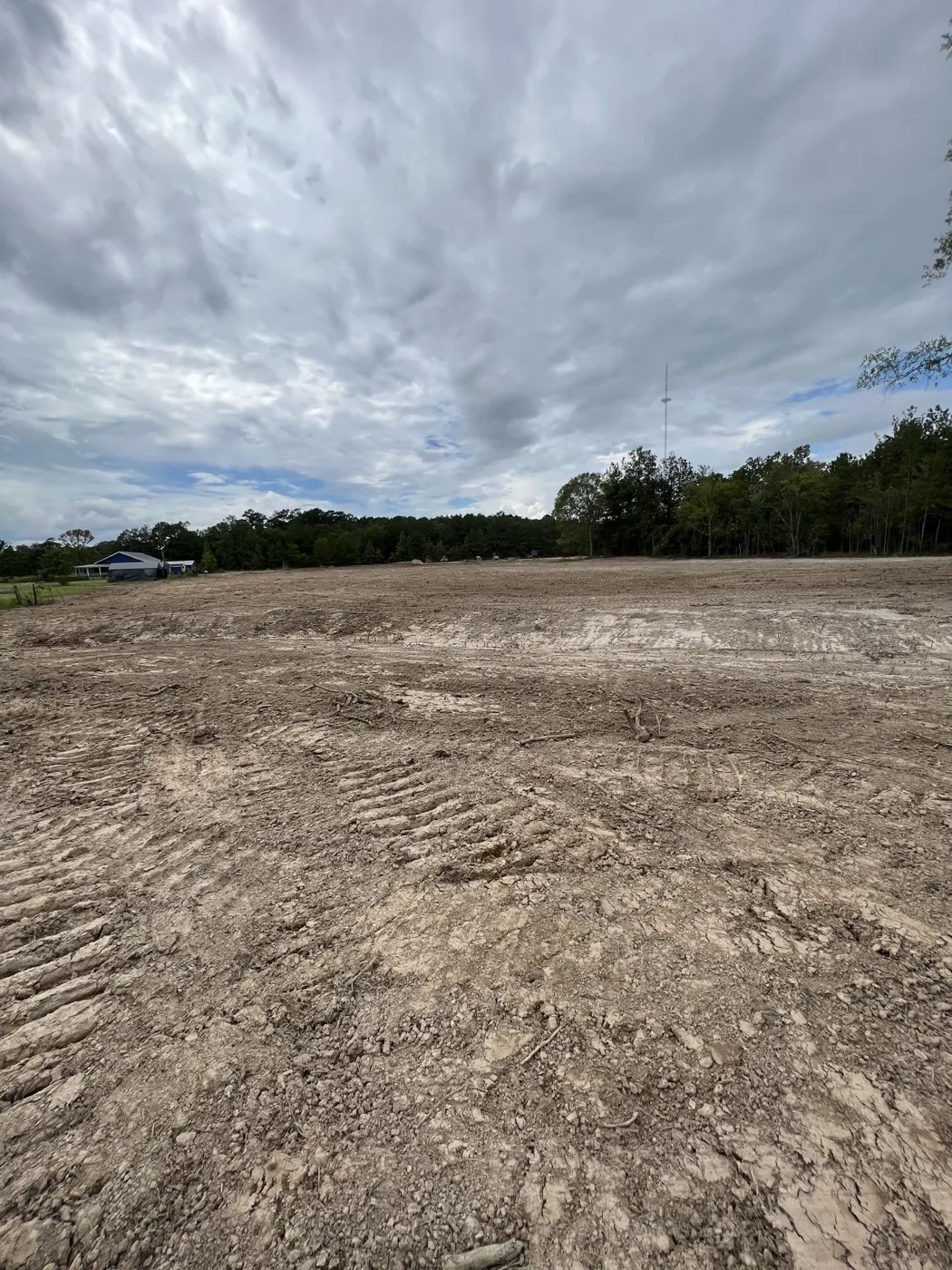
When is the best time of year for land clearing in Southeast Texas?
Late winter through spring, February to April, plus November. Those are the driest months around Buna by NOAA’s own numbers, the vegetation is dormant for most of that window, and the brutal heat is out of the picture. Summer is the wettest stretch of the year here, not the driest, which surprises people who assume clearing season means July.
That is the short answer. The honest answer is that Southeast Texas does not hand out a perfect month, and the ground itself gets the final vote. Here is how the year actually breaks down for land clearing work in our corner of the state.
What do the rain numbers really say?
The weather station records for the Port Arthur area, the closest long-term NOAA station to Buna, put the annual normal at just over 62 inches of rain, the wettest corner of Texas. The distribution is the useful part:
| Stretch of the year | Monthly rainfall (NOAA normals) | What it means for clearing |
|---|---|---|
| February to April | About 3.1 to 3.9 inches | The year’s most reliable window |
| May | 4.7 inches | Usually still workable, trending wetter |
| June to September | 6.7 to 6.9 inches every month | The soak: short windows between rains |
| October | 5.5 inches | Transitional, storm cleanup season |
| November | 3.9 inches | The second window |
| December to January | 5.0 to 5.3 inches | Wet winter, despite the cool air |
Two things stand out. First, there is no true dry season: even the best months catch three-plus inches. Second, “winter is dry” is wrong here. January averages 5.32 inches, more than May. The real windows are late winter into spring, and that shoulder month of November before the winter rains set in.
Why doesn’t the calendar settle it?
Because the ground holds its own opinion. The flatwoods soils that cover much of the Buna area are the reason. The USDA’s type example for this landscape is literally named for Evadale, a few miles south of us in Jasper County: a poorly drained silt loam that the soil survey describes as saturated from the surface down through the cool season in most years. Translation: even in the lower-rain months of late winter, flatwoods ground can stay soft because nothing is evaporating and the water table sits high.
That is why local scheduling runs on drying stretches, not months. Texas forestry best practices say to stay off saturated soils rather than rut and compact them, and we hold to that: a machine that cuts ruts in soft ground leaves damage that outlasts any schedule win. The sandy upland stretches around here drain fast and come back into work a day or two after rain. The silty flats and clay bottoms need longer. Same county, same week, different answer, which is one more reason every honest timeline starts with walking the property.
The method matters too. Tracked forestry mulching equipment treads lighter than heavy dozer work and keeps a protective layer on the ground, so it stretches the workable season on soft tracts. How long the work itself takes is its own question, and we broke that down in how long it takes to clear an acre.
How do burn bans and hurricane season fit in?
If your clearing plan ends with burning the debris, drought is your scheduling enemy. Burn bans are declared county by county when conditions dry out, and they can freeze a debris burn for months. As we write this in late August 2026, 178 of Texas’s 254 counties are under a ban, including Newton and Tyler counties next door, while Jasper is currently clear. It changes daily, and the Texas A&M Forest Service’s statewide map is the place to check. The irony is real: the weather that firms up the ground is the same weather that bans the burn. Mulching sidesteps the whole problem, since nothing needs burning.
Hurricane season runs June 1 through November 30 and peaks around September 10, stacked right on top of the wettest months. Planned work still happens through it, but storm years reshuffle everything: downed timber and storm cleanup jump the queue, and soggy ground slows the planned jobs that remain.
One more seasonal note worth knowing: federal wildlife guidance recommends scheduling vegetation removal outside the peak bird nesting season, which runs roughly April through August depending on location. For most private clearing jobs it is a judgment call rather than a permit issue, but on big wooded tracts it is one more point in favor of the fall and winter side of the calendar.
So when should you book?
Work backward from the window you want. The February-to-April stretch is the year’s most dependable, and it books up because everybody’s ground firms at the same time. Getting on the schedule in the fall or early winter, before the window opens, is how you land at the front of it. November is the underrated pick: dry, cool, dormant vegetation, and ahead of the winter rains.
And if your land is ready now, whatever month it is, the right move is a walk-through rather than waiting on a perfect forecast. We clear year-round across Buna, Silsbee, Jasper, Kirbyville, and the rest of Southeast Texas, working with the ground instead of against it, and we will tell you straight if a tract needs to wait for drier dirt. The estimate is free through the contact page, rain or shine.